

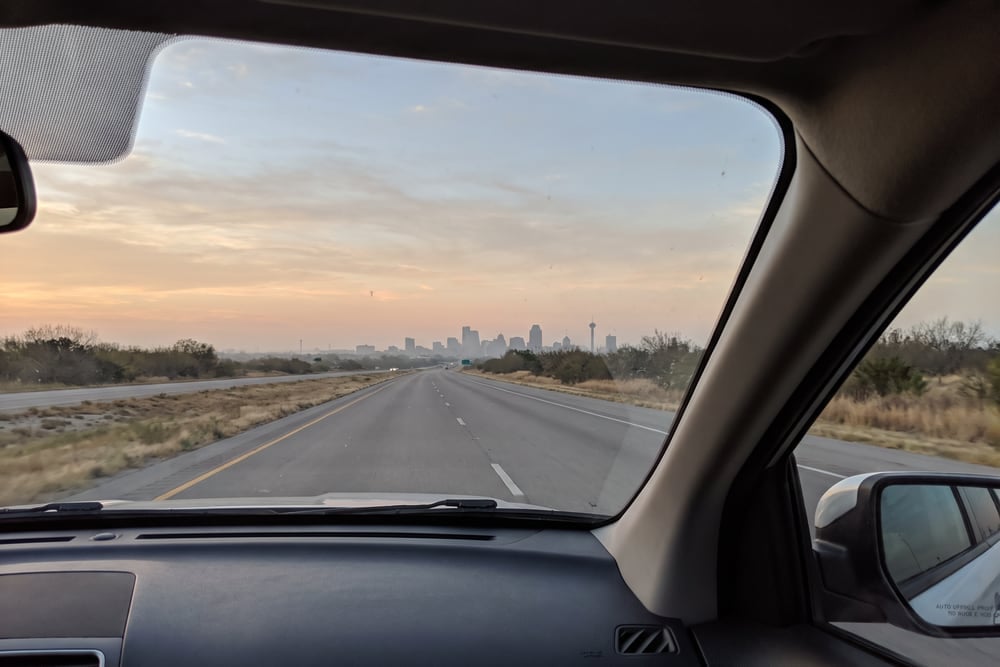
A patient driving in from Laredo, Del Rio, McAllen, Corpus Christi, Eagle Pass, New Braunfels, or as far east as Lake Charles, Louisiana, is not having a different operation from the patient who lives twenty minutes from the office. The incisions are the same. The anesthesia is the same. The tissue heals on the same biological schedule. Distance changes none of that.
What distance changes is the follow-up. And the follow-up is where problems get caught early.
That is the reason Dr. Ayala plans travel patients differently from local ones. A hematoma that would have been identified at a routine two day visit becomes a phone call from a motel room hours away. A seroma a local patient mentions in passing at a drain check becomes a photograph sent by text. A patch of skin that looks slightly dusky in person reads as normal under a bathroom light. None of this is a reason to refuse to operate on patients who live out of town. It is a reason to build the trip around the follow-up instead of the follow-up around the trip.
Most practices approach this question as a hospitality problem: lodging suggestions, restaurants, a note about the airport. Those things matter and they appear further down this page. But the useful version of this conversation is clinical. How many trips does a given procedure honestly require. How many nights before the first post-operative visit clears a patient to travel. What does a long car journey do to a body three days after a tummy tuck. What can a surgeon actually see in a photograph. Who does a patient call at eleven at night in Eagle Pass when something feels wrong.
This page works through those questions in the order a traveling patient encounters them, which is to say chronologically, rather than procedure by procedure. The information on the practice's out of town patients page covers the administrative side. What follows is the reasoning behind the plan.
Distance does not change the surgery, it changes the surveillance
Surgical complications are not evenly distributed across recovery. The great majority of the events that matter clinically, bleeding, hematoma, infection, wound separation, unusual swelling, a drain that stops draining when it should not, declare themselves inside the first ten to fourteen days. Some of them declare themselves in the first forty eight hours. This is not a reason for alarm; serious complications are uncommon in healthy, properly selected patients. It is simply the shape of the risk curve, and it is the shape that determines how a trip should be built.
For a patient who lives in San Antonio, that risk curve is managed almost invisibly. They are seen when they need to be seen, sometimes on short notice, and an issue caught on day three is usually a minor issue. For a patient who has driven in from McAllen, every one of those visits is a logistical decision. The traveling patient therefore has to spend the early part of that curve near the practice, and has to have a plan for the rest of it.
The second consequence is that patient selection becomes slightly more conservative. A patient with a body mass index at the upper edge of the acceptable range, a history of smoking, poorly controlled blood pressure, or a procedure combination that pushes operative time long, is more likely to need an unscheduled visit. Dr. Ayala takes distance into account when weighing those factors, which sometimes means staging a plan into two operations rather than one, and sometimes means a longer stay than the patient initially budgeted for.
What a virtual consultation for plastic surgery can settle, and what it cannot
A virtual consultation is genuinely useful, and it is routinely oversold. Both things are true, and travel patients deserve a precise account of where the line falls.
A video consultation can establish a great deal. It can take a full medical history, often the most decision relevant information in the entire encounter: prior surgeries, prior anesthesia, clotting history, medications, supplements, tobacco use, pregnancy history, and weight stability. It can establish what the patient actually wants, which is harder and more important than it sounds, because a patient describing a loose abdomen and a patient describing a bulging abdomen are often describing two different operations. It can identify candidates who are clearly not candidates yet, a patient six weeks postpartum, still breastfeeding, or thirty pounds away from a stable weight. And it can plan the trip: how many days, how many visits, what to arrange at home, what labs to have ready.
What a virtual consultation cannot do is substitute for a surgeon's hands. There is no camera angle that reports how much skin laxity a patient has, because laxity is assessed by lifting and releasing tissue and watching what it does. There is no video frame that reports soft tissue thickness over the breast, pinch thickness at the upper abdomen, the quality of the fascia, the tone of a rectus diastasis, or whether an apparent breast asymmetry is a volume difference, a footprint difference, or a chest wall difference. Implant selection in particular is an in-person decision: base width, soft tissue coverage, nipple position relative to the inframammary fold, and skin stretch all enter into it, and none of them are measurable through a screen. The same is true of nasal assessment, where tip support, cartilage strength, and internal airway are palpated and examined, not photographed. For patients weighing breast augmentation, the sizing conversation is one of the strongest arguments for an in-person visit well before the day of surgery.
So the standard Dr. Ayala works to is this: an in-person examination before the day of surgery is the norm, not the exception. For most traveling patients that means a short first trip for the examination, and a second trip for the operation.
There are circumstances in which a same-trip consultation and surgery is reasonable. When the procedure is anatomically straightforward and the plan has little branching, when photographs are of good diagnostic quality and consistent with the history, when the patient is healthy with no complicating medical background, and when the examination on arrival confirms rather than revises the plan, a consultation on one day and surgery two or three days later on the same trip can be a sound arrangement. That gap is deliberate. It allows a pre-operative visit, lab work, a proper surgical consent conversation that is not rushed, and the possibility of changing the plan if the examination finds something unexpected.
Two trips are genuinely necessary when the plan depends on findings. Revision surgery of any kind belongs in this category, because the operative plan hinges on what the prior surgery actually did. Secondary rhinoplasty belongs here emphatically. Significant breast asymmetry, a question of whether a lift is needed alongside an implant, a mastopexy decision that could go several ways, and complex abdominal cases with scarring from prior operations all belong here. So does any case in which the patient's goals and the achievable result are not yet aligned, because that conversation needs an examination, a mirror, and time.
A patient who is uncertain which category they fall into should not try to decide alone. The practice can usually tell from photographs and history, and that assessment is part of what happens when a patient requests a consultation.
Trip one versus trip two: which procedures compress and which do not
The question most traveling patients ask first is whether they can do everything in one trip. The honest answer is that it depends less on the patient's schedule and more on how much the plan could change once Dr. Ayala has examined them.
Procedures that compress reasonably into a single trip share a feature: the plan is largely determined before arrival and is unlikely to be rewritten by the examination. Upper eyelid surgery in a patient with straightforward dermatochalasis is a good example. Isolated liposuction of a defined area in a patient of stable weight is another. A primary breast augmentation in a patient with good tissue, symmetric breasts, and no question about whether a lift is needed can sometimes be managed this way, provided the sizing session happens on arrival rather than on the morning of surgery. Small scar revisions and minor contour touch ups also fit.
Procedures that do not compress well are those where the examination carries real decision weight. Primary rhinoplasty is a borderline case that Dr. Ayala generally prefers to split, because nasal planning is highly individual and because the patient needs time to look at imaging, think, and come back with questions rather than consenting to a nose ninety minutes after meeting the surgeon. Secondary rhinoplasty should always be two trips. Breast cases where a lift may or may not be needed should be two trips, because the difference between an augmentation and an augmentation with mastopexy is a different operation, a different recovery, a different scar pattern, and a different conversation. A mommy makeover that combines abdominoplasty with breast work and liposuction should be two trips, both because the planning is layered and because the recovery demands a longer stay that is easier to arrange when the patient has already seen the office, met the staff, and knows the city a little.
There is also a middle option that works well for patients within driving range, which includes much of South and Central Texas. A short first trip, in and out in a single day, for the examination and planning, followed by a second trip for surgery and the early recovery. For a patient coming from New Braunfels or Corpus Christi, that first trip is an inconvenience. For a patient coming from Lake Charles, it is a real expense, and that is exactly the situation in which a thorough virtual consultation with excellent photographs earns its place, because it determines whether that first trip is necessary at all or whether a consult-plus-surgery trip can be planned safely.
How long to stay after plastic surgery, by procedure category
This is the number patients most want and the number that is most often given carelessly. It is not a single number, because what drives it is not the procedure's name but three specific things: when the first post-operative visit falls, whether there are drains and when they come out, and how much of the early complication window the patient should spend within reach of the office.
Facial procedures. Eyelid surgery, including patients traveling in for blepharoplasty from Del Rio and similar distances, generally allows the shortest stay. Bruising and swelling are expected and are not in themselves a reason to remain, and the main early concerns are bleeding and vision changes, which declare themselves quickly. A stay of several nights, with a post-operative check before departure, is typical. Rhinoplasty tends to require a slightly longer window because of splint and packing management and because the first visit involves more than a wound inspection. Facelift and neck lift patients should plan the longest facial stay, since drains may be present, the dressing is changed in the office, and hematoma risk in the first forty eight hours is the single most important thing to be near the practice for.
Breast procedures. Augmentation without a lift is relatively forgiving. Patients are usually seen within the first few days, and once that visit is clear, travel home is reasonable. Augmentation with mastopexy, and lift or reduction procedures generally, warrant a longer stay, because there is more incision to heal, more tension on that incision, and more that can be addressed easily in the office and awkwardly from a distance. Implant exchange and capsule work vary widely and are planned individually.
Body procedures with drains. This is the category where the stay is longest and where the number is driven almost entirely by drain output. A tummy tuck patient cannot sensibly plan a stay by calendar alone, because drains come out when output falls below a threshold, and that happens on different days in different people. A patient who budgets the minimum and books a return journey accordingly has created a situation in which the drain either comes out too early or the patient drives home with it in place and no plan for removal. Dr. Ayala's guidance for abdominoplasty and mommy makeover patients is to plan for a stay that comfortably covers the first post-operative visit and expected drain removal, with flexibility built in. The practice's tummy tuck recovery timeline sets out what those first days actually involve. Large volume liposuction sits between the breast and abdominoplasty categories, with compression management being the main reason for an office visit before departure.
Across all categories one rule holds: no traveling patient should begin a long journey home before being seen at least once post-operatively and cleared for travel. That visit exists to catch what the patient cannot see.
The drive home has its own risk profile
A long car journey after surgery is not a neutral event, and it deserves to be planned as carefully as the operation.
Sitting still for hours in a semi-reclined position, after an operation, with reduced mobility and often with some dehydration from the preceding day, is a recognized set of conditions for venous thromboembolism. The risk is real but it is also substantially modifiable, and the modification is simple: stop regularly, get out of the car, walk for a few minutes, drink water, and repeat. A journey that would normally be done in one push should be broken into segments. Some patients, particularly after abdominal or combined body procedures, are better served by splitting a long drive across two days with an overnight stop, and that is a reasonable thing to build into the budget rather than a sign that something has gone wrong.
Positioning matters too. Abdominoplasty patients travel more comfortably with the seat reclined and a pillow supporting the abdomen, which reduces tension across the incision over bumps and braking. Facial surgery patients should keep the head elevated. Seat belts stay on, routed away from incisions where possible.
The patient should not be the driver. This is not a comfort recommendation. Narcotic analgesia, muscle relaxants, residual anesthetic effects, interrupted sleep, and limited range of motion all impair driving, and a patient who feels fine at the start of a three hour drive may not feel fine at hour two. A companion who can drive the whole way home is part of the surgical plan, in the same way that a ride from the surgical facility is.
Pain control on the road needs thought in advance. Medication belongs in the car with a written schedule, not in a suitcase in the trunk, because patients lose track of doses while traveling. Anti-nausea medication is worth having within reach, as is a note of where emergency departments sit along the route. Patients who want a broader sense of what the first weeks feel like can read the practice's recovery timeline after plastic surgery before they travel.
Remote follow-up: what a photograph shows and what it hides
Once a traveling patient is home, follow-up shifts to a combination of scheduled photographs, phone or video contact, and in some cases a return visit. This works, and it works best when both sides understand its limits.
Photographs are genuinely informative for a defined set of questions. Incision appearance, the presence and pattern of bruising, the color of skin along a flap edge, the degree of swelling compared with a prior image, the appearance of a suture line or a scab, and gross asymmetry are all assessable from good images. The qualifier matters: good images. That means consistent lighting, ideally natural daylight, no filters, no flash in a mirror, the same angles each time, a plain background, and the same distance. A series of consistent photographs over two weeks is far more useful than a single excellent photograph, because change over time is the signal.
What a photograph cannot report is anything that depends on touch or on the third dimension. Fluctuance, which is the sensation of fluid moving under the skin and the key sign of a seroma, is palpated. Firmness and warmth in a localized area, the central finding in early cellulitis, is felt. Depth of a wound separation is probed. Pain on palpation over one area versus another, tightness of a muscle repair, the character of swelling, and the stability of an implant position are all physical examination findings. A photograph of an abdomen with a seroma and a photograph of the same abdomen without one can look identical.
There is also a category of signs where the answer is not to send a photograph and wait for a reply. These are the situations in which a traveling patient should be seen by a physician locally the same day, whether that means a primary care office, an urgent care center, or an emergency department, and should call the practice at the same time rather than instead:
Fever with chills. Chest pain or shortness of breath. Calf pain, swelling, or tenderness in one leg. Sudden, marked, one sided swelling, particularly in the breast or abdomen, which can indicate a hematoma. Bleeding that soaks through dressings. A drain that abruptly stops draining in a patient who had been draining well, or drainage that becomes cloudy or foul. Spreading redness with warmth. Pain that escalates sharply rather than easing. Any wound that opens.
Driving four hours back to San Antonio with any of those findings is the wrong decision. Being seen locally within the hour, and having that local physician speak with the practice, is the right one. The practice's post-operative questions resource covers the more routine end of this spectrum, the things that are expected and do not require a call at midnight.
Arranging a local point of contact before surgery
If a distance patient does only one piece of preparation beyond booking lodging, it should be this: identify, before the operation, a physician or facility near home who can see them on short notice afterward.
The reason is that the value of a local contact collapses if it is arranged in a crisis. A patient in Eagle Pass at nine in the evening on post-operative day five, with a tender, warm, reddening area over an incision, is not in a good position to find a clinician, explain a surgical history, and establish trust. The same patient who called their primary care physician two weeks before surgery, explained what operation was planned and when, and asked whether that office could see them during the recovery window, is in an entirely different position. Most primary care offices say yes to that request. The conversation takes five minutes and it converts a potential emergency department visit into a same day office visit with someone who already knows the context.
In larger surrounding markets, including Laredo, McAllen, and Corpus Christi, there is usually a local plastic surgeon as well, and it is worth knowing who that is even if the relationship is never used. A local colleague who can lay hands on a patient and then call Dr. Ayala directly closes the gap that distance opens. It is simply redundancy, which is how safety is built everywhere else in medicine.
Practically, the patient should travel home with the operative details written down: the procedure performed, the date, implant details if applicable, drain status, medications prescribed, and the practice's contact numbers including after hours. A copy in the glove box and a photograph of it on a phone covers most scenarios. Any local physician will ask for exactly those details, and the patient who has them gets a faster, better assessment.
Practical logistics: lodging, companions, time off, and whether to fly or drive
Lodging. Traveling patients should stay close to the practice for the first part of recovery, not close to the attractions. Short, repeatable trips to the office matter more than anything else about the location. A ground floor room, or reliable elevator access, matters considerably for abdominoplasty patients. A refrigerator for medication and cold food, a microwave, and grab bars where available are worth more than amenities. Extended stay style accommodation often suits recovery better than a conventional hotel room, because a small kitchen removes the need to go out for food. The practice can point patients toward suitable options near the San Antonio office.
A companion is not optional. Every traveling surgical patient needs a capable adult with them, and the requirement extends well past the day of surgery. That person drives, collects prescriptions, manages the medication schedule, helps with drains and compression garments, notices changes the patient cannot see, helps with position changes, and makes the judgment call about whether to escalate. For patients having abdominal or combined procedures, the first two to three days involve real assistance with getting up, walking, and basic hygiene. A companion who can stay for the whole trip is far more useful than two people who hand over midway. Family traveling in from Laredo or New Braunfels for a mommy makeover often plan childcare at home for the full duration, which is usually easier than bringing children along.
Time off work. The honest figure is longer than most patients hope and shorter than they fear. Eyelid surgery and minor procedures often allow a return to desk work inside two weeks, with the caveat that bruising may still be visible. Breast augmentation patients in sedentary work are often back in a similar window. Abdominoplasty and combined body procedures require longer, and anyone whose work involves lifting, physical labor, or long periods standing should plan a materially extended absence and discuss specific restrictions before booking leave. Travel patients should add buffer days at both ends rather than scheduling a return to work for the day after they get home.
Flying versus driving. For most of the surrounding region, driving is simpler, because it avoids airport transfers, allows a reclined position, permits unlimited stops, and makes space for garments, pillows, and supplies. For patients coming from further afield, including Lake Charles, flying is often more comfortable on the way in and should be discussed carefully for the journey home, since timing after surgery depends on the procedure and on clearance at the post-operative visit. Aisle seats, movement during the flight, hydration, and compression stockings all matter. Whichever mode a patient chooses, return travel should not be booked as non refundable on a tight date, because recovery does not read itineraries. Patients weighing the financial side should look at the available payment and financing options alongside travel, lodging, and lost income rather than after them, since the true cost of a distance procedure includes all four.
Traveling for surgery is a reasonable thing to do when it is planned as a clinical exercise rather than a trip. The surgery is the same wherever the patient lives. The plan around it is what has to be different, and patients who want to begin that conversation can reach the practice directly.
Frequently Asked Questions
Can out of town plastic surgery patients have a consultation and surgery on the same trip?
Sometimes. It is reasonable when the procedure is straightforward, the patient is healthy, photographs are of good quality, and the examination on arrival confirms the plan. Dr. Ayala schedules the consultation and the operation on different days of the same trip, leaving room for lab work, planning, and consent. Revision cases, secondary rhinoplasty, and breast cases where a lift may be needed require two trips.
Is a virtual consultation for plastic surgery enough to plan surgery?
A virtual consultation settles a great deal: medical history, goals, broad candidacy, and trip logistics. It cannot assess skin laxity, tissue thickness, fascial tone, airway anatomy, or implant sizing, all of which require examination by hand. An in-person exam before the day of surgery is the standard Dr. Ayala works to.
How long should patients stay in San Antonio after plastic surgery?
It depends on the first post-operative visit, whether drains are present, and when they come out. Eyelid surgery generally allows the shortest stay. Breast lifts and reductions need longer than augmentation alone. Abdominoplasty and mommy makeover patients should plan the longest stay with flexibility built in, since drain removal is driven by output rather than calendar date.
Can patients travel from Laredo to see a plastic surgeon in San Antonio?
Yes, and patients traveling from Laredo for procedures including rhinoplasty are common in the practice. The drive is within range for a short planning trip followed by a surgical trip, which suits cases where the examination carries real decision weight.
Should Del Rio patients traveling for blepharoplasty expect a long stay?
Eyelid surgery requires one of the shorter stays. The main early concerns declare themselves quickly, and once a post-operative check is clear, travel home is reasonable. Bruising may still be visible afterward, which is a cosmetic consideration rather than a clinical one.
Can a mommy makeover be planned from New Braunfels in one trip?
The surgery can be done on a single surgical trip, but planning normally takes two visits because the combination of procedures involves layered decisions. The recovery stay is also longer, and New Braunfels patients are close enough that a brief planning visit is not burdensome.
Why should travel patients not drive themselves home after surgery?
Narcotic pain medication, muscle relaxants, residual anesthetic effects, poor sleep, and limited range of motion all impair driving. A patient who feels capable at the start of a long drive often does not two hours in. A companion who can drive the whole way is part of the plan.
What can a surgeon tell from follow-up photographs?
Incision appearance, bruising pattern, skin color along flap edges, swelling compared with earlier images, and gross asymmetry are assessable from consistent, unfiltered photographs taken in daylight at the same angles each time. Fluctuance, warmth, firmness, wound depth, and tenderness on palpation are not.
Which symptoms mean a traveling patient should see a local doctor the same day?
Fever with chills, chest pain or breathlessness, one sided calf pain or swelling, sudden marked one sided swelling of the breast or abdomen, bleeding through dressings, a drain that stops or turns cloudy, spreading redness with warmth, sharply escalating pain, or any wound that opens. These warrant same day local evaluation and a call to the practice, not a long drive back.
Is it better to fly or drive to San Antonio for surgery?
Driving suits most of the surrounding region because it allows reclined positioning, unlimited stops, and room for supplies. Patients from further away, including Lake Charles, Louisiana, often fly in, and the return flight should be discussed at the post-operative visit rather than booked on a fixed date.