

Every consultation about Endolift starts differently than a consultation for a procedure patients already understand. Nobody asks "what is a facelift," they've usually got a rough idea already. But "Endolift near me" is a search a lot of San Antonio patients type before they've ever spoken to a surgeon about it, which means the first real conversation about this treatment tends to happen in the exam room, not on the website.
So instead of another generic explainer, this is written the way that actual conversation goes: as a running set of questions, in the order patients tend to ask them, answered directly by Dr. Ayala.
"What exactly is Endolift, in plain terms?"
It's a laser treatment that goes underneath the skin through a single, tiny entry point, thinner than a filler needle, using local anesthesia only. The fiber does two things from that one position: it melts small pockets of fat under the chin or along the jawline, and it heats the deeper skin layer just enough to kick off a collagen tightening response over the following weeks. No incision that needs stitches, no general anesthesia, and you're home the same day.
"Is it basically a mini facelift?"
I get why it gets marketed that way, but no, and I'd rather tell you that directly than let you find out after paying for it. A facelift physically removes excess skin and repositions the deeper support structures of the face. Endolift tightens skin that still has elastic capacity left in it. If your skin has lost that elasticity, and a lot of patients past a certain point genuinely have, a laser isn't going to substitute for what surgery does. I check that during your exam with a simple pinch test before I ever recommend this treatment over a surgical facelift.
"How do I know which one I actually need?"
Age is a rough guide, but it's not the deciding factor, skin quality is. Patients in their late 30s and early 40s with early jowling and skin that snaps back reasonably well after a pinch test tend to be strong Endolift candidates. Patients with more advanced jowling, a heavily descended neckline, or skin that stays tented after a pinch test are telling me, physically, that a laser treatment alone won't get them the result they're picturing. I'll say that plainly in your consultation rather than sell you something I don't think will satisfy you a year from now.
"What does recovery actually feel like, day by day?"
Because the entry point is so small, this recovers more like an injectable treatment than a surgery. Expect mild swelling for three to seven days, some bruising at the entry point for up to about ten days, and a tight, slightly numb feeling in the treated area for the first few days. Most patients are back to normal activity, including light exercise, within a few days. What surprises people is the results timeline, not the recovery. Because the tightening comes from your own collagen rebuilding, you won't see the final look for eight to twelve weeks. If you're expecting an overnight change the way filler gives you, this isn't that.
"Does it hurt?"
Most patients describe it as mild discomfort, well managed with the local anesthesia during the procedure itself. Some tenderness and tightness afterward is normal and usually fades within a week.
"Can it be combined with anything else?"
Often, yes, but I plan that deliberately rather than bundling by default. Endolift solves a laxity and submental fat problem. It doesn't address volume loss in the cheeks, which is a separate concern usually handled with injectables, and it doesn't address surface texture or sun damage, which is what laser skin resurfacing is built for. If you've got more than one of those going on, and most patients past a certain age do, we map out which treatment addresses which concern before layering anything together, rather than treating all three with one tool and getting a mediocre result on all fronts.
"How is this different from the radiofrequency skin tightening you already offer?"
Good question, and one I wish more patients asked before booking somewhere. Radiofrequency skin tightening works from the surface, heating the skin externally to stimulate collagen. Endolift works from underneath through the fiber, which is why it can also address submental fat in the same session, something surface-level RF devices can't do. If you've already tried RF tightening and felt underwhelmed, Endolift's deeper mechanism is often the reason patients come back asking about it specifically.
"Is it permanent?"
No, and anyone telling you otherwise is overselling it. Results typically hold for one to two years depending on your skin quality, age, and how quickly natural collagen decline continues. Most patients plan on some form of maintenance down the line, and I'd rather you know that going in than be surprised by it eighteen months later.
"What does it cost?"
That depends entirely on how many areas we're treating in one session, jawline alone versus jawline plus the submental area versus a broader lower-face treatment. Not every practice in San Antonio has the specific laser platform this requires, and pricing varies based on the equipment and the provider's experience with it. I'll give you an accurate number after we've actually mapped out your treatment areas in consultation, not before.
"How do I make sure I'm getting the real treatment and not something similar being marketed under the same name?"
This is worth asking directly wherever you go, not just here. Endolift requires a specific fiber-optic laser platform and training on that exact technique. A generic radiofrequency or surface laser device marketed with a similar name isn't the same treatment, and results, downtime, and who's actually a good candidate can differ meaningfully between the two. Ask specifically whether the practice uses the Endolift system itself, not just a comparable-sounding laser tightening service.
"Why did I have to search for this instead of finding a page about it directly?"
Fair question, and the honest answer is that Endolift is still new enough that a lot of practices, including ones that may already be equipped to perform it well, haven't built out dedicated information explaining it yet. That gap tends to leave patients stuck between a flashy social media clip and no local, medically grounded explanation of what the treatment actually involves. If you found your way here by searching "Endolift near me" or "Endolift San Antonio" without much else useful showing up, that's the exact gap this page is meant to close, and it's worth raising any lingering questions directly in consultation rather than piecing together an answer from video clips alone.
"What should I bring up in my consultation to get the most out of it?"
Bring your actual concern, not just the procedure name. Tell me what specifically bothers you when you look in the mirror, a soft jawline, fullness under the chin, early sagging, rather than just "I want Endolift." Sometimes what a patient describes turns out to be a volume issue, not a laxity issue, and those need different solutions entirely, sometimes better addressed with injectables rather than a laser treatment at all. I'd rather spend the first ten minutes of your consultation figuring out the actual problem than assume the treatment you searched for is automatically the right fix.
"Who's actually performing the treatment, and does that matter?"
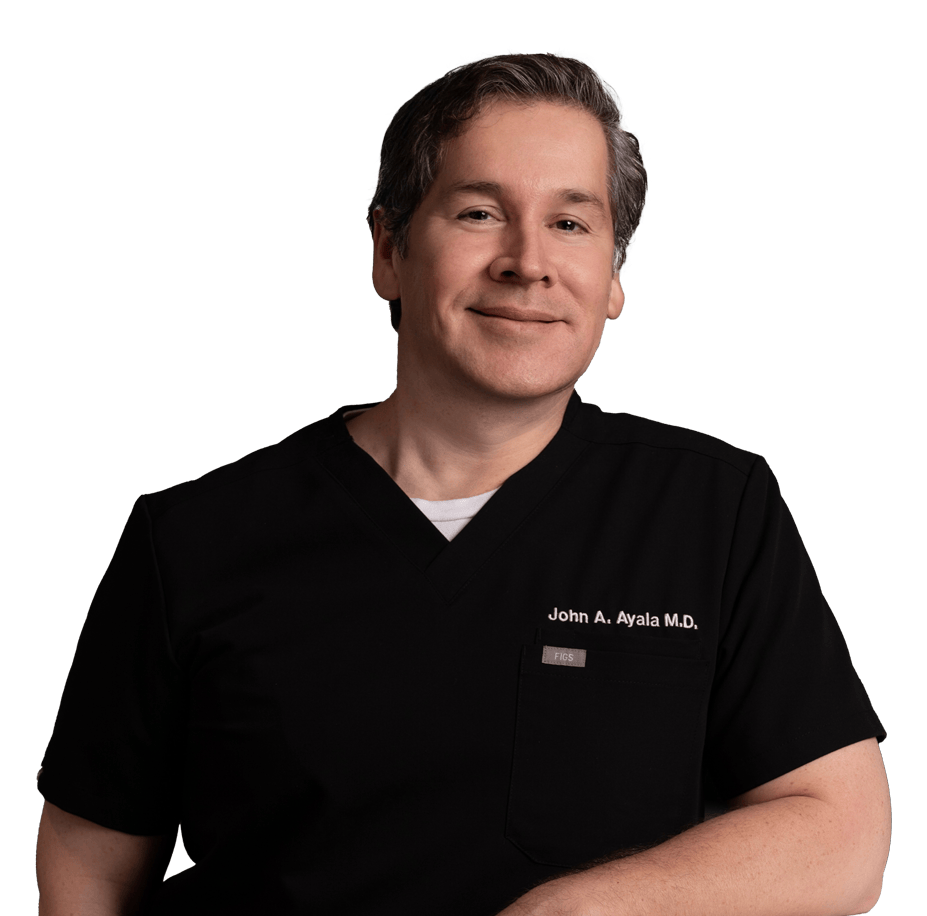
It matters more than most marketing for this treatment lets on. Endolift involves placing a laser fiber near facial nerves and vasculature, so the provider's working knowledge of facial anatomy isn't a nice-to-have, it's the difference between a clean result and a complication. Our practice is led by Dr. John Ayala, a board-certified plastic surgeon, which means the same anatomical training that goes into a surgical facelift also informs how this laser treatment is planned and executed. That's a meaningfully different level of oversight than a technician-run med spa treatment, even if the device on the shelf has the same name.
"What does the actual appointment look like, start to finish?"
Most Endolift appointments run under an hour once you're in the treatment room. We start by marking the treatment areas while you're upright and your face is in its natural resting position, since lying down changes how skin and fat sit and can throw off the plan if marked afterward. Local anesthesia is administered at the entry point, and once you're numb, the fiber is inserted and moved carefully through the marked areas under the skin. You'll feel pressure and occasional warmth as the laser energy is delivered, but not sharp pain. There's no need for sedation, so you're able to drive yourself home afterward, though most patients prefer to take it easy for the rest of the day given the swelling that starts to develop within the first few hours.
"Will people be able to tell I had something done?"
For the first several days, yes, mild swelling and some bruising at the entry point are visible up close, though most patients find it's easily covered with makeup after the first day or two. Beyond that early window, no. Because Endolift's tightening effect builds gradually over eight to twelve weeks rather than appearing all at once, there's no obvious before-and-after moment the way there is with a facelift's more immediate reveal. People tend to notice you look refreshed without being able to identify exactly what changed, which is usually the goal for patients choosing this treatment specifically because they didn't want an obviously "done" appearance.
"I'm still not sure this is the right treatment for me. What's the next step?"
Honestly, that's the right instinct if you're unsure, and it's better to work through it in person than to keep researching indefinitely. We offer a virtual consultation option for patients who want an initial read on candidacy before committing to an office visit, and our full non-surgical treatment menu covers the full range of options if Endolift turns out not to be the right fit once we've talked through your specific goals.
Frequently Asked Questions
Is Endolift painful?
Most patients report mild discomfort managed easily with local anesthesia during the procedure. Some tightness and tenderness in the days after treatment is normal and typically resolves within a week.
How many Endolift sessions do I need?
Many patients see meaningful results from a single session, though some benefit from a second treatment three to six months later for additional tightening, particularly if starting laxity was more advanced.
Can Endolift be combined with other treatments?
Yes, in appropriate candidates. Endolift addresses skin laxity and submental fat specifically. Volume loss and surface texture concerns are treated separately, and combination planning should happen during consultation rather than as a default package.
Will insurance cover Endolift?
No. Endolift is a cosmetic, elective procedure and is not covered by health insurance.
How do I know if I need Endolift or a facelift?
The only reliable way is an in-person evaluation of your skin's remaining elasticity, the degree of jowling or neck laxity present, and your goals, done during a consultation with a board-certified plastic surgeon.
How is Endolift different from radiofrequency skin tightening?
Radiofrequency tightens skin from the surface. Endolift delivers laser energy underneath the skin through a thin fiber, which also allows it to reduce small pockets of submental fat in the same session, something surface-level devices cannot do.