

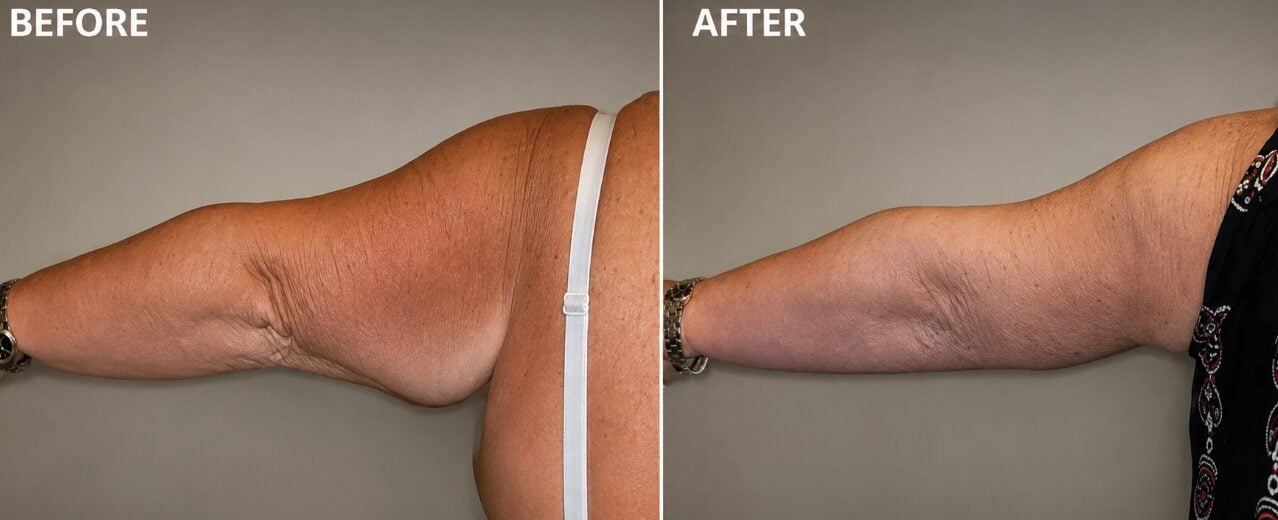
Loose, hanging skin along the upper arms, sometimes described as "bat wings," is one of the more common concerns patients bring to Dr. John Ayala's San Antonio practice, particularly following significant weight loss or as a natural part of aging. Unlike arm fat, which can sometimes respond to diet and exercise, genuinely loose arm skin requires surgical correction, and understanding candidacy and what recovery actually involves helps patients approach arm lift surgery with realistic expectations.
Why Arm Skin Loosens in the First Place
The skin of the upper arm, much like the abdomen, has some capacity to contract when underlying fat volume decreases or as part of the natural aging process, but this elastic capacity is limited. Significant weight loss, whether gradual or more rapid following bariatric surgery, can leave behind more excess skin than the arm's remaining elasticity can accommodate. Natural aging also reduces skin elasticity over time, independent of weight changes, which is why some patients notice loose upper arm skin developing gradually even without any significant weight fluctuation.
Genetics play a meaningful role as well, since some patients are predisposed to less resilient skin elasticity in this specific area regardless of their overall fitness level or weight history, explaining why two patients of similar age and body composition can have quite different degrees of arm skin laxity.
What Arm Lift Surgery Actually Involves
An arm lift, or brachioplasty, removes excess skin and, when needed, underlying fat from the upper arm, extending from the underarm area toward the elbow. Dr. Ayala makes an incision typically beginning at the armpit and continuing along the inner arm toward the elbow, then removes the excess skin and tightens the remaining tissue before closing the incision. In patients with a smaller amount of excess skin concentrated closer to the underarm, a more limited incision confined to this area alone may be appropriate, while patients with more extensive skin excess along the full length of the arm require the longer, more comprehensive incision.
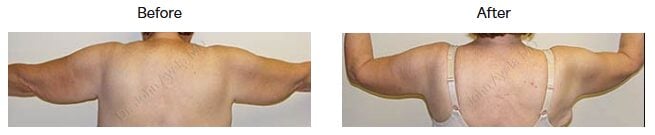
Who Is a Good Candidate for Arm Lift Surgery
Good candidates for arm lift surgery are patients with loose, hanging skin along the upper arm that persists regardless of exercise or strength training, since this concern reflects a structural skin issue that targeted arm exercises cannot resolve. Patients should have reached a stable weight, ideally maintained for at least six months, since continued weight fluctuation can affect surgical planning and results.
Patients considering arm lift surgery should also have realistic expectations about the trade-off involved, since removing significant excess skin necessarily results in a scar running along the treated portion of the arm. Patients who are willing to accept this scar in exchange for eliminating loose, hanging skin tend to be the most satisfied with their results, while patients who are primarily hoping to avoid any visible scarring at all may want to discuss whether a more limited procedure or non-surgical alternative might be more appropriate for their specific situation.
Combining Arm Lift With Liposuction
For patients who have both loose skin and localized excess fat in the upper arm, Dr. Ayala often combines arm lift surgery with liposuction of the treated area, addressing both concerns within the same procedure. This combination allows for a more complete refinement of the arm's overall contour than addressing skin excess or fat alone would achieve, particularly for patients whose arms have both problems occurring simultaneously.
What Happens During an Arm Lift Consultation
During a consultation, Dr. Ayala evaluates the specific degree and location of skin excess along the arm, assesses whether excess fat is also present, and discusses your specific goals and your comfort level with the resulting scar. This evaluation determines whether a more limited or a more extensive incision approach is appropriate for your particular anatomy, and whether combining the procedure with liposuction would provide additional benefit.
The Procedure Itself
Arm lift surgery is performed under general anesthesia and typically takes one and a half to two and a half hours, depending on the extent of skin removal needed and whether liposuction is being performed at the same time. Dr. Ayala carefully plans the incision to remove the maximum amount of excess skin while positioning the resulting scar along the inner arm, where it is less visible in many everyday situations than a scar on the outer or more visible portion of the arm would be.
Arm Lift Recovery Timeline
In the first few days following surgery, swelling, bruising, and discomfort are most pronounced, managed with prescribed pain medication and a compression garment worn to support healing tissue and manage swelling. Most patients feel comfortable with light daily activities within the first week, though the arms should be kept elevated when resting during this early period to help minimize swelling.
By two weeks, many patients feel ready to return to work, particularly for less physically demanding jobs, though heavy lifting and strenuous arm-engaging exercise remain restricted for four to six weeks to allow the incision to heal fully and reduce the risk of the scar widening under tension. Full, final results, including the maturation of the scar itself, continue to develop over the following six to twelve months.
Scar Care and Long-Term Appearance
Because arm lift surgery involves a longer incision than many other body contouring procedures, scar care is a particularly important part of the recovery process. Dr. Ayala provides specific guidance, which may include silicone scar sheets or gel and diligent sun protection over the healing incision, both of which can meaningfully improve the long-term appearance of the resulting scar. Most patients find that their scar fades considerably and becomes much less noticeable over the year following surgery, though it will always remain at least somewhat visible upon close inspection.
Setting Realistic Expectations About the Scar Trade-Off
Patients considering arm lift surgery should view the resulting scar honestly as a genuine trade-off for the significant improvement in arm contour the procedure provides, rather than assuming the scar will be completely invisible. Dr. Ayala discusses this trade-off directly and honestly during consultations, showing before-and-after photographs that include visible scarring so patients can make a fully informed decision rather than being surprised by the scar's appearance after surgery.
Non-Surgical Alternatives and Their Limitations
Patients sometimes ask whether non-surgical skin-tightening treatments could address arm skin laxity without surgery. While certain energy-based devices can provide some modest tightening for patients with mild laxity, these treatments cannot achieve the same degree of improvement as surgical skin removal for patients with more significant, genuinely loose hanging skin. Dr. Ayala discusses these non-surgical options honestly with patients whose concerns are milder, while being direct that patients with more substantial skin excess will not achieve comparable results without surgery.
Combining Arm Lift With a Broader Body Contouring Plan
Many patients pursuing arm lift surgery, particularly those who have experienced significant weight loss, are also addressing other areas of the body within a broader contouring plan, sometimes as part of a comprehensive mommy makeover or a more extensive post-weight-loss body contouring sequence. Dr. Ayala evaluates each patient's full range of concerns to determine whether combining arm lift surgery with additional procedures during the same or a coordinated series of surgical sessions would provide the most efficient, comprehensive overall result.
How Age Affects Arm Lift Planning
Younger patients considering arm lift surgery, particularly those addressing skin excess following significant weight loss at a younger age, often have somewhat better residual skin elasticity than older patients, which can influence the specific technique and extent of correction needed. Older patients, or those with more significantly compromised skin elasticity from a combination of aging and weight changes, typically require a more extensive skin excision to achieve a comparably smooth result. Dr. Ayala's evaluation of skin quality during the consultation, independent of chronological age alone, determines the most appropriate surgical approach for each individual patient.
The Emotional Impact of Loose Arm Skin
Many patients carry meaningful self-consciousness about loose arm skin for years, avoiding sleeveless clothing, certain exercises, or situations where their arms might be visible, sometimes altering their wardrobe entirely to conceal this specific concern. Dr. Ayala's patients frequently describe a significant boost in confidence following arm lift surgery, not simply from the physical change itself but from the freedom to wear clothing styles they had avoided for years and participate in activities without the self-consciousness this concern had created.
Preparing for Arm Lift Surgery
Patients preparing for arm lift surgery are generally advised to stop smoking and nicotine use well in advance, since nicotine significantly impairs the body's ability to heal, particularly relevant given the length of the incision involved in this procedure. Any medications or supplements that increase bleeding risk should be reviewed with Dr. Ayala's office and paused as directed. Arranging for a ride home following surgery and having loose, comfortable clothing that does not require pulling over the head, which can strain the healing incisions, ready for the weeks following surgery are both practical steps that support a smoother recovery.
What to Expect at Follow-Up Visits
Following arm lift surgery, patients typically return for several follow-up visits over the weeks after the procedure, allowing Dr. Ayala to monitor healing, address any questions, and confirm that the compression garment schedule and activity restrictions are being followed appropriately. These visits are an important opportunity to catch any early concerns and ensure the incision is healing as expected before it fully matures over the following months.

Why Choosing an Experienced Surgeon Matters
Arm lift surgery requires careful judgment regarding incision placement and tension management to achieve a well-healed, favorably positioned scar while maximizing skin removal. Dr. Ayala's exclusive focus on cosmetic surgery of the face, breast, and body brings dedicated experience to this procedure, and patients researching their options should ask any prospective surgeon about their specific experience with brachioplasty and review before-and-after results specifically for this procedure before making a decision.
How Arm Lift Incision Techniques Have Evolved
Older brachioplasty techniques sometimes involved a single, continuous incision from the armpit to the elbow regardless of the amount of correction actually needed, resulting in more extensive scarring than some patients' anatomy genuinely required. Dr. Ayala's approach specifically tailors incision length to the actual extent of skin excess present, avoiding an unnecessarily long incision for patients whose concern is concentrated in a smaller area closer to the underarm, while still providing the more extensive incision needed for patients with skin laxity extending the full length of the upper arm. This individualized approach to incision planning reflects a broader philosophy of matching the surgical intervention precisely to each patient's specific anatomical need rather than applying a single standardized technique regardless of the degree of correction required.
Understanding the Trade-Off Between Scar Length and Skin Removal
Patients sometimes hope for a shorter scar without fully appreciating the direct relationship between incision length and the amount of skin that can be removed through that incision. A shorter incision fundamentally limits how much excess skin can be safely and effectively removed, meaning patients with more significant skin laxity who insist on the shortest possible incision may end up with a less complete correction than a longer incision would provide. Dr. Ayala discusses this direct trade-off honestly during consultations, helping patients understand that the incision length ultimately recommended reflects a genuine attempt to balance scar minimization against achieving a meaningfully improved arm contour, rather than an arbitrary choice.
What Determines Whether You Need the Full-Length or Limited Incision Approach
The specific determining factor in this decision is where along the arm your excess skin is concentrated and how much of it exists. Patients whose skin laxity is concentrated primarily near the underarm, without significant additional excess extending toward the elbow, are often good candidates for the more limited incision approach. Patients with excess skin distributed along the full length of the upper arm require the more extensive incision to achieve a comprehensive, evenly contoured correction. Dr. Ayala's physical examination during your consultation, including assessing skin laxity at multiple points along the arm, determines which category your specific anatomy falls into.
The Role of Skin Elasticity in Determining Your Specific Outcome
Beyond the amount of excess skin present, the remaining skin's elasticity meaningfully affects how smoothly it redrapes following surgery. Patients with reasonably good residual elasticity in the skin that remains after excision tend to see a smoother, more evenly contoured result, while patients with significantly compromised elasticity throughout the entire arm, sometimes related to more advanced age or a longer history of significant weight fluctuation, may see a somewhat less uniformly smooth result even with meticulous surgical technique. Dr. Ayala discusses this consideration honestly during consultations, since understanding your own skin's specific characteristics helps calibrate realistic expectations for your particular result.
How Patients Describe Their Decision-Making Process
Patients who have gone through the decision-making process leading up to arm lift surgery often describe a similar internal journey: an initial period of trying to address the concern through exercise or other non-surgical means, followed by a gradual acceptance that the specific concern of loose, hanging skin requires surgical correction, and finally a period of research and consultation before feeling confident in the decision to proceed. Understanding that this is a common, well-trodden path can offer some reassurance to patients currently in the earlier stages of this same decision-making process.
Managing Swelling Through Elevation and Compression
Beyond simply wearing the compression garment as directed, patients can support their own recovery by proactively elevating the arms whenever resting during the first week or two, since gravity naturally encourages fluid accumulation in the lower arms and hands if they remain in a dependent position for extended periods. Using pillows to prop the arms slightly above heart level while sitting or sleeping can meaningfully reduce swelling in the hands and forearms during this early recovery window, complementing the compression garment's supportive effect on the surgical site itself.
Why Some Patients Choose to Delay Arm Lift Surgery
Not every patient who is a good candidate for arm lift surgery chooses to proceed immediately after their consultation, and this is a completely reasonable choice. Some patients want additional time to fully process the permanence of the resulting scar, while others are waiting for a more convenient window in their work or family schedule to accommodate the recovery period. Dr. Ayala's practice supports this kind of unhurried decision-making, understanding that patients who take the time they need to feel fully confident in their decision tend to be more satisfied with their results than those who feel rushed into a surgical decision before they were genuinely ready.
How Arm Lift Surgery Affects Clothing and Wardrobe Choices Going Forward
Many patients report that one of the most meaningful practical changes following arm lift surgery involves a genuine expansion in the clothing styles they feel comfortable wearing, from sleeveless tops and dresses to swimwear styles they had previously avoided. This practical wardrobe freedom is often cited by patients as one of the most tangible, day-to-day benefits of the procedure, extending well beyond the more abstract concept of improved body confidence into concrete changes in how patients dress and present themselves in both casual and more formal settings.
What Long-Term Follow-Up Looks Like
Beyond the immediate post-operative follow-up visits during the first several weeks, Dr. Ayala's practice welcomes patients to return for a longer-term follow-up visit several months after surgery, once the scar has had adequate time to mature and the final result has fully settled. This longer-term check-in provides an opportunity to assess the final outcome, address any lingering questions about scar care, and confirm that the patient is satisfied with their overall result, reflecting the practice's broader commitment to supporting patients throughout the entire arc of their surgical journey rather than considering care complete once the initial recovery period has passed.
Addressing Concerns About Arm Function After Surgery
Patients occasionally worry that surgery involving this much of the arm's surface might affect their strength or range of motion, but arm lift surgery addresses skin and, when needed, fat, without affecting the underlying muscle function itself. Most patients experience a full return to normal arm strength and range of motion once healing is complete, with the temporary restrictions during recovery reflecting the need to protect the healing incision rather than any lasting impact on the arm's functional capacity.
How Dr. Ayala Approaches Patients With Asymmetric Arm Concerns
Some patients present with noticeably more skin excess on one arm than the other, sometimes related to an old injury, surgery, or simply natural anatomical variation. Dr. Ayala's evaluation and surgical planning accounts for this kind of asymmetry directly, sometimes recommending a somewhat different extent of correction on each arm to achieve a more balanced, symmetric overall result rather than applying an identical surgical plan to both arms regardless of their differing starting anatomy.
Financing Options for Arm Lift Surgery
Because arm lift surgery is considered an elective cosmetic procedure, it is not covered by insurance, and Dr. Ayala's practice offers payment and financing options through third-party providers, allowing patients to spread the cost of surgery over manageable monthly payments rather than requiring the full amount upfront. Patients are encouraged to discuss these options directly during their consultation to understand what financing arrangements might work best for their specific budget.
Why Reviewing Multiple Before-and-After Examples Matters
Before committing to arm lift surgery, patients benefit from reviewing Dr. Ayala's before-and-after gallery specifically for arm lift results, looking for multiple examples across a range of starting anatomy rather than a single best-case result. This broader review helps set realistic, individualized expectations, since a patient with significant skin excess should compare their anticipated result against similar starting cases rather than the most dramatic transformation the gallery happens to feature.
Taking the Next Step
If you are considering arm lift surgery in San Antonio and want a personalized evaluation of your specific arm anatomy and candidacy, contact Dr. Ayala's office today.
Frequently Asked Questions
Will exercise get rid of loose arm skin?
No. While exercise can build underlying muscle tone, it cannot tighten loose, excess skin, which requires surgical removal to correct.
How visible will my arm lift scar be?
The scar runs along the inner arm from the underarm toward the elbow and will always remain somewhat visible, though it typically fades considerably over the year following surgery with proper scar care.
How long is recovery after an arm lift?
Most patients feel comfortable returning to work within about two weeks, though heavy lifting and strenuous exercise are typically restricted for four to six weeks to support proper healing.
Can arm lift surgery be combined with liposuction?
Yes. Many patients benefit from combining arm lift surgery with liposuction to address both loose skin and excess fat within the same procedure.
How do I know if I need a full or limited-incision arm lift?
This depends on the extent and location of your specific skin excess, which Dr. Ayala evaluates during your consultation to recommend the most appropriate incision approach.
Is arm lift surgery covered by insurance?
No. Arm lift surgery is considered an elective cosmetic procedure and is not covered by insurance.
When will I see my final results?
Most visible swelling resolves within a few weeks, but the fully settled result, including scar maturation, continues to develop over six to twelve months following surgery.