

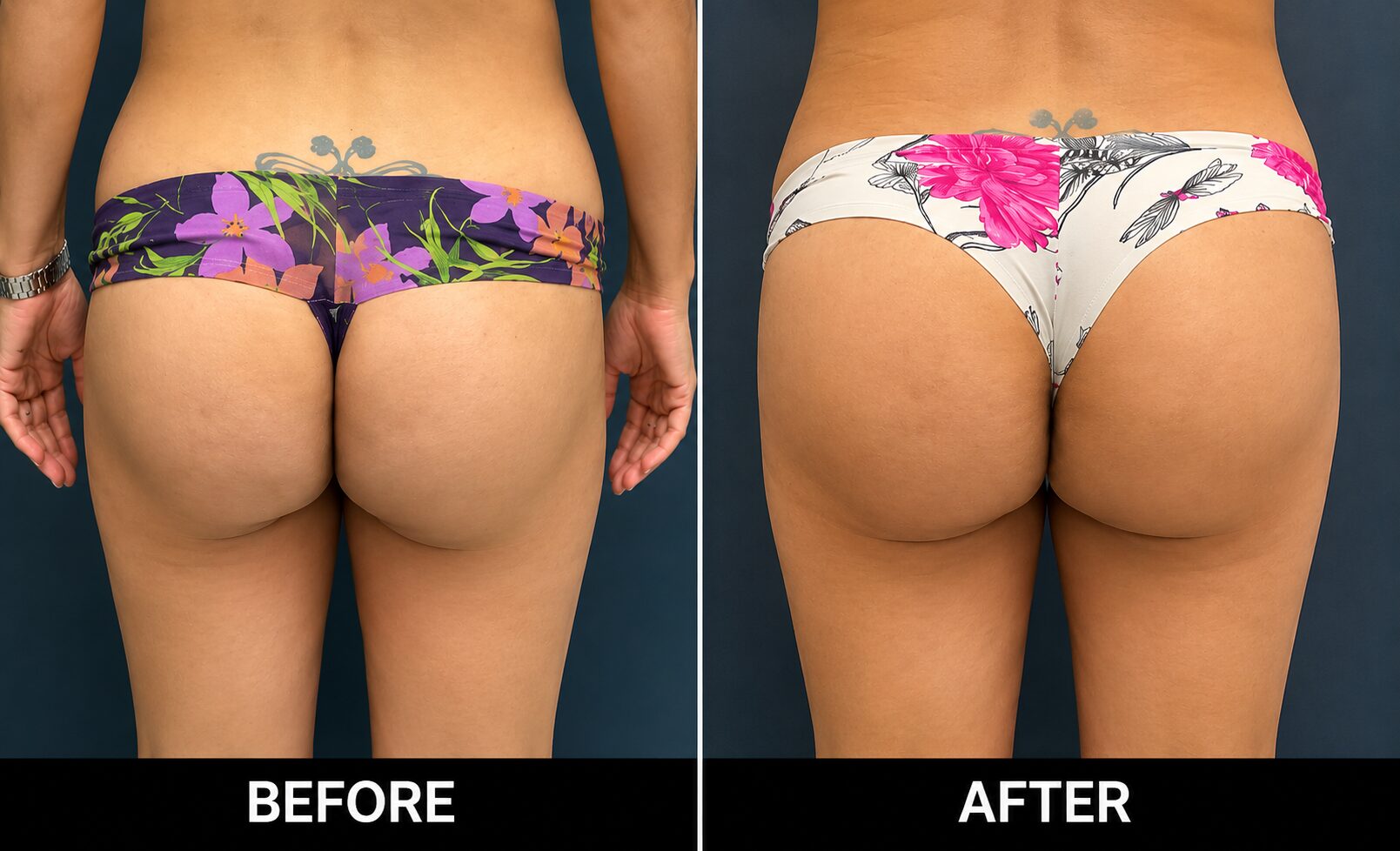
Patients researching buttock enhancement in San Antonio frequently conflate two procedures that address fundamentally different problems: a traditional buttock lift and a Brazilian Butt Lift, commonly abbreviated BBL. Both procedures involve the buttocks, and both can improve the overall appearance of that area, but they work through entirely different mechanisms and are appropriate for entirely different patient concerns. Choosing based on which name sounds more familiar, rather than which procedure actually addresses your specific anatomy, is one of the more common ways patients end up disappointed with results that were technically successful but never going to solve the problem they actually had.
Dr. John Ayala, a board-certified plastic surgeon practicing in San Antonio, evaluates each patient's specific concern, whether it's excess skin and sagging, insufficient volume, or a combination of both, before recommending which of these genuinely different procedures, or which combination, actually applies.

What a Traditional Buttock Lift Actually Corrects
A traditional buttock lift is a skin excision procedure. It is designed to address sagging, loose, or excess skin in the buttock and surrounding area, typically as a result of significant weight loss, aging, or genetics that have left the skin unable to retract on its own after volume changes underneath it. The procedure involves surgically removing excess skin and tightening the remaining tissue, lifting the buttocks into a higher, more youthful position without necessarily adding any volume at all.
This distinction matters considerably. A buttock lift does not make the buttocks larger. If anything, some patients see a slight reduction in overall size as excess, sagging tissue is removed. The goal of a buttock lift is a smoother, tighter, better-positioned buttock contour, not increased projection or volume.
Patients who are the best candidates for a traditional buttock lift generally have significant skin laxity, often following substantial weight loss, and are not primarily seeking more volume or a rounder, fuller shape. For these patients, adding volume through fat transfer without first addressing the excess skin would not solve their underlying concern, since the loose skin would simply drape over any added volume rather than being corrected by it.
What a Brazilian Butt Lift Actually Corrects
A Brazilian Butt Lift, despite the name suggesting a lifting procedure, is actually a volumizing procedure. It uses fat transfer, meaning fat harvested through liposuction from another area of the body such as the abdomen, flanks, or thighs, which is then purified and carefully injected into the buttocks to increase size, improve shape, and enhance overall projection and curvature.
BBL does not address excess or sagging skin the way a traditional buttock lift does. It adds volume beneath the skin, which can sometimes create a modest lifting effect as a side effect of increased volume filling out the area, but this is fundamentally different from the surgical skin excision and tightening a true buttock lift performs. A patient with significant skin laxity who undergoes BBL without any skin excision may find that the added volume does not correct, and can sometimes even emphasize, existing skin laxity in the surrounding area.
Good candidates for BBL generally have adequate skin elasticity already and are primarily seeking increased size, improved shape, or enhanced curvature, along with having sufficient donor fat available elsewhere on the body to harvest for the transfer, since the procedure depends on having enough fat to work with for a meaningful result.
Why This Distinction Gets Confused So Often
Part of why these two procedures are so frequently conflated comes down to marketing language and popular culture. BBL has become a widely recognized term, often used informally to refer to any buttock enhancement procedure regardless of the specific technique involved, which has blurred public understanding of what the procedure actually does technically. Patients sometimes arrive at a consultation asking for "a BBL" when their actual visible concern, sagging or excess skin, is something BBL as a volumizing procedure was never designed to correct.
This is one of the more important reasons an accurate, anatomy-specific consultation matters more than defaulting to whichever procedure name a patient has heard most often. Dr. Ayala's approach to these consultations generally starts with identifying exactly what is visually driving a patient's concern, sagging skin, insufficient volume, or both, before any specific procedure name enters the conversation.
Combining Both Procedures When Both Concerns Are Present
Many patients, particularly those who have experienced significant weight loss, have both excess skin and a desire for improved volume and shape simultaneously. In these cases, a combined approach that incorporates skin excision and tightening alongside fat transfer can address both concerns in a single surgical plan, though this combination requires careful planning since removing skin and adding volume in the same area involves balancing two different surgical goals within the same tissue.
Patients considering a combined approach after significant weight loss may also want to review the practice's mommy makeover content if their concerns extend beyond the buttocks to the abdomen and other areas affected by weight change or pregnancy, since a comprehensive body contouring plan often addresses multiple areas together rather than the buttocks in isolation.
Recovery Differences Between the Two Procedures
Recovery from a traditional buttock lift generally involves a longer initial healing period than BBL alone, since the procedure involves more extensive incisions and skin closure. Patients typically need to avoid sitting directly on the treated area for a period following surgery, and swelling and bruising can take several weeks to substantially resolve, with scars maturing over many months.
Recovery from BBL involves its own specific restrictions, most notably the well-known requirement to avoid direct pressure on the buttocks for a period of weeks after surgery, since the newly transferred fat needs time to establish blood supply in its new location before it can tolerate the pressure of sitting or lying directly on the treated area. Patients are generally advised to sleep on their stomach or side and to use specialized cushions that redistribute pressure away from the buttocks when sitting is unavoidable during this recovery window. This restriction exists specifically to protect the survival of the transferred fat, since fat cells that lose their blood supply due to excessive pressure will not survive and the volume gained from the procedure will be correspondingly reduced.
Combined procedures involve a recovery period that accounts for both sets of restrictions, generally requiring the longer timeline associated with skin excision surgery while also observing the pressure restrictions specific to fat transfer.
Understanding Fat Survival and Realistic Expectations for BBL
A detail that deserves more attention than it often receives in BBL consultations is that not all transferred fat survives permanently in its new location. A percentage of the injected fat, generally cited in a range that varies based on technique and individual healing, is naturally reabsorbed by the body in the months following surgery, while the remainder establishes a lasting blood supply and becomes permanent. This is part of why BBL results are typically evaluated at a minimum of three to six months after surgery, once this natural fat survival process has largely completed, rather than judged immediately based on the initial post-operative appearance.
This fat survival consideration is also part of why adequate donor fat availability matters for candidacy. A surgeon generally needs to harvest and purify more fat than the final desired volume, accounting for the expected percentage that won't survive, which means patients with very limited donor fat available may not be ideal candidates for achieving significant volume increase through BBL alone.
What Happens During a Consultation
A consultation to determine which procedure, or which combination, actually applies to a specific patient's goals involves a physical examination of skin quality and elasticity in the buttock and surrounding area, an assessment of current volume and shape relative to the patient's stated goals, and an evaluation of available donor fat elsewhere on the body if volume enhancement through fat transfer is being considered. Dr. Ayala's approach typically involves being direct with patients about which procedure their specific anatomy actually calls for, even when that means explaining that the specific procedure name a patient requested isn't the right fit for their particular concern.
Common Myths About Buttock Enhancement
Myth: A BBL will fix sagging skin if you add enough volume. Adding volume beneath sagging skin does not correct the sagging itself, and in some cases can actually make loose skin more apparent by stretching it further over an increased volume without addressing the skin's underlying lack of elasticity. Patients with genuine skin laxity generally need the excision and tightening a traditional buttock lift provides, either instead of or in combination with any volume enhancement.
Myth: Buttock lift surgery makes the buttocks bigger. A traditional buttock lift is primarily a skin-tightening and repositioning procedure. It can sometimes result in a slightly more lifted, rounder appearance simply due to repositioning existing tissue into a higher position, but it does not add volume the way fat transfer does, and patients specifically wanting increased size should understand that a lift alone will not achieve that goal.
Myth: BBL results are permanent and require no further consideration. While a meaningful percentage of transferred fat does become permanent, results can still change over time with significant weight fluctuation, since transferred fat cells behave like fat cells anywhere else in the body and will respond to changes in a patient's overall body weight in the years following surgery.
Myth: Any plastic surgeon can safely perform a BBL. BBL fat transfer specifically carries certain technique-dependent risks, including the risk of fat embolism if fat is injected into or too close to deeper muscle layers rather than the appropriate subcutaneous tissue plane. This has become a recognized area of specific technique concern within plastic surgery broadly, making surgeon-specific experience and technique for this particular procedure a genuinely important safety consideration, not simply a matter of general plastic surgery board certification alone.
A More Detailed Look at Candidacy for Each Procedure
Beyond the basic skin-versus-volume distinction, several additional factors inform which approach is genuinely appropriate for an individual patient. Overall body weight stability matters for both procedures, but particularly for BBL, since significant weight fluctuation after surgery can affect the transferred fat's appearance over time in ways that differ from how the surrounding native tissue responds to the same weight change.
For traditional buttock lift candidacy specifically, the degree of skin laxity present, along with its underlying cause, whether significant weight loss, pregnancy-related changes, or simply the aging process, all factor into surgical planning, since the amount of skin requiring excision and the resulting scar pattern depend on how much correction is actually needed.
For BBL candidacy specifically, beyond simply having adequate donor fat available, overall skin quality in the buttock area itself matters, since patients with reasonably good existing skin elasticity will generally see a smoother, more predictable result from added volume than patients whose skin quality is already compromised, even if that compromise isn't severe enough to be the primary concern driving the consultation.
What to Look for When Choosing a Surgeon for Buttock Enhancement
Given the specific technique-dependent risks associated with fat transfer to the buttocks, patients researching BBL specifically should ask a prospective surgeon directly about their specific injection technique and safety protocols, including how they ensure fat is placed in the appropriate tissue plane rather than deeper muscle layers. It is reasonable to ask how many BBL procedures a surgeon performs regularly and what safety measures they have specifically adopted regarding fat placement technique.
For traditional buttock lift surgery, reviewing a surgeon's specific experience with body contouring after significant weight loss, if that's the relevant patient history, and looking at before-and-after examples of patients with a similar starting degree of skin laxity, provides a more accurate sense of what result that specific surgeon consistently achieves for patients in a comparable starting position.
Recovery Timeline in More Practical Detail
Patients benefit from a more specific week-by-week understanding of what recovery actually involves for each procedure. For BBL specifically, the first one to two weeks require the most careful pressure avoidance, with most surgeons recommending sleeping exclusively on the stomach or side and using specialized cushions for any necessary sitting. By weeks three and four, restrictions typically ease somewhat, allowing brief, cushioned sitting for practical necessities, though strict avoidance of direct pressure for extended periods generally continues through at least the six-week mark. Most patients can return to normal sitting without special accommodations somewhere between six and eight weeks, though this varies based on individual healing and the specific volume of fat transferred.
For traditional buttock lift recovery, the first one to two weeks involve the most significant activity restriction, including avoiding direct pressure on the incision area and limiting movements that place tension on the healing incisions. Weeks three through six generally bring a gradual return to most normal activities, with strenuous exercise and activities placing significant strain on the treated area typically restricted until at least six weeks, sometimes longer depending on the extent of the original procedure.
When Patients Need Both Procedures Combined
For patients who have experienced significant weight loss and are now dealing with both substantial skin laxity and reduced buttock volume, addressing both concerns together requires a surgeon experienced in balancing the competing surgical priorities involved. Removing excess skin while simultaneously adding volume through fat transfer to the same general area requires careful planning regarding incision placement, the sequence of the two components within the procedure, and how the added volume will settle once the skin tightening portion of the surgery has been completed.
This kind of combined approach generally involves a longer single surgery and a recovery period that reflects the more extensive nature of the combined procedure, but for the right candidate, it allows both concerns to be addressed in one surgical episode rather than requiring two entirely separate procedures performed months apart.
Considerations for Patients Who May Have Future Pregnancies
Patients considering either procedure who anticipate future pregnancy should factor this into their timing and procedure decision, since pregnancy-related weight and skin changes can affect the results of either a buttock lift or BBL performed beforehand. For patients planning future pregnancies, some surgeons recommend delaying elective body contouring surgery until childbearing is complete, since the significant weight and skin changes pregnancy can involve may alter results in ways that could necessitate future revision regardless of how well the original procedure was performed.
This is a reasonable topic to raise directly during consultation if future pregnancy is a realistic consideration, since a surgeon can help weigh the tradeoffs between proceeding now versus waiting, based on individual circumstances and preferences rather than a one-size-fits-all recommendation.
Frequently Asked Questions
Is a Brazilian Butt Lift the same as a buttock lift?
No. A Brazilian Butt Lift is a volumizing procedure using fat transfer to increase size and shape. A traditional buttock lift is a skin excision procedure that removes excess, sagging skin and does not add volume.
Which procedure do I need if I have loose skin after weight loss?
A traditional buttock lift, which removes excess skin and tightens the remaining tissue, is generally the appropriate procedure for significant skin laxity. BBL alone would not correct sagging skin and could potentially emphasize it.
Can I combine a buttock lift and BBL in one surgery?
Yes, for patients who have both significant excess skin and a desire for increased volume, a combined approach can address both concerns, though this requires careful surgical planning to balance skin removal with fat transfer in the same area.
Why can't I sit normally after a BBL?
Direct pressure on the buttocks can compress the newly transferred fat and cut off its blood supply before it has time to establish itself in its new location, which would reduce how much of the transferred fat ultimately survives. Avoiding pressure for several weeks protects the result.
Does all the fat transferred during a BBL survive permanently?
No. A portion of the transferred fat is naturally reabsorbed by the body in the months following surgery, while the rest establishes a lasting blood supply and becomes permanent. This is why final results are typically evaluated at three to six months after surgery.
What if I don't have enough fat elsewhere on my body for a BBL?
Adequate donor fat availability is a genuine candidacy consideration for BBL, since the procedure depends on harvesting enough fat to account for both the desired final volume and the portion that won't survive the transfer process.
How do I know which procedure is right for me?
An in-person evaluation of your specific skin quality, current volume, and goals is the most accurate way to determine which procedure, or combination, actually addresses your concern, since the two procedures work through entirely different mechanisms.