


Few areas of the body are as stubbornly resistant to change as the abdomen. A person can commit to a disciplined diet, log years of consistent workouts, and still find that a rounded lower belly, loose skin, or a soft midsection simply will not budge. For many people, the reason has nothing to do with effort and everything to do with anatomy. Pregnancy, significant weight loss, aging, and genetics can all leave behind stretched skin and separated abdominal muscles that no amount of exercise can fully correct. A tummy tuck, known medically as abdominoplasty, is the procedure designed to address exactly these concerns. At Ayala Plastic Surgery in San Antonio, board-certified plastic surgeon Dr. John Ayala performs tummy tuck surgery tailored to each patient, restoring a flatter, firmer, and more proportionate midsection.
This guide covers everything a prospective patient should understand before considering the procedure. It explains who makes a good candidate, the important differences between a full abdominoplasty and a mini tummy tuck, how the underlying muscles are repaired, where the scar is placed and how it is managed, what the recovery looks like week by week, and how a tummy tuck fits alongside other body procedures. The goal is to give a clear, honest picture so that the decision to move forward, or not, is an informed one.
What Is a Tummy Tuck?
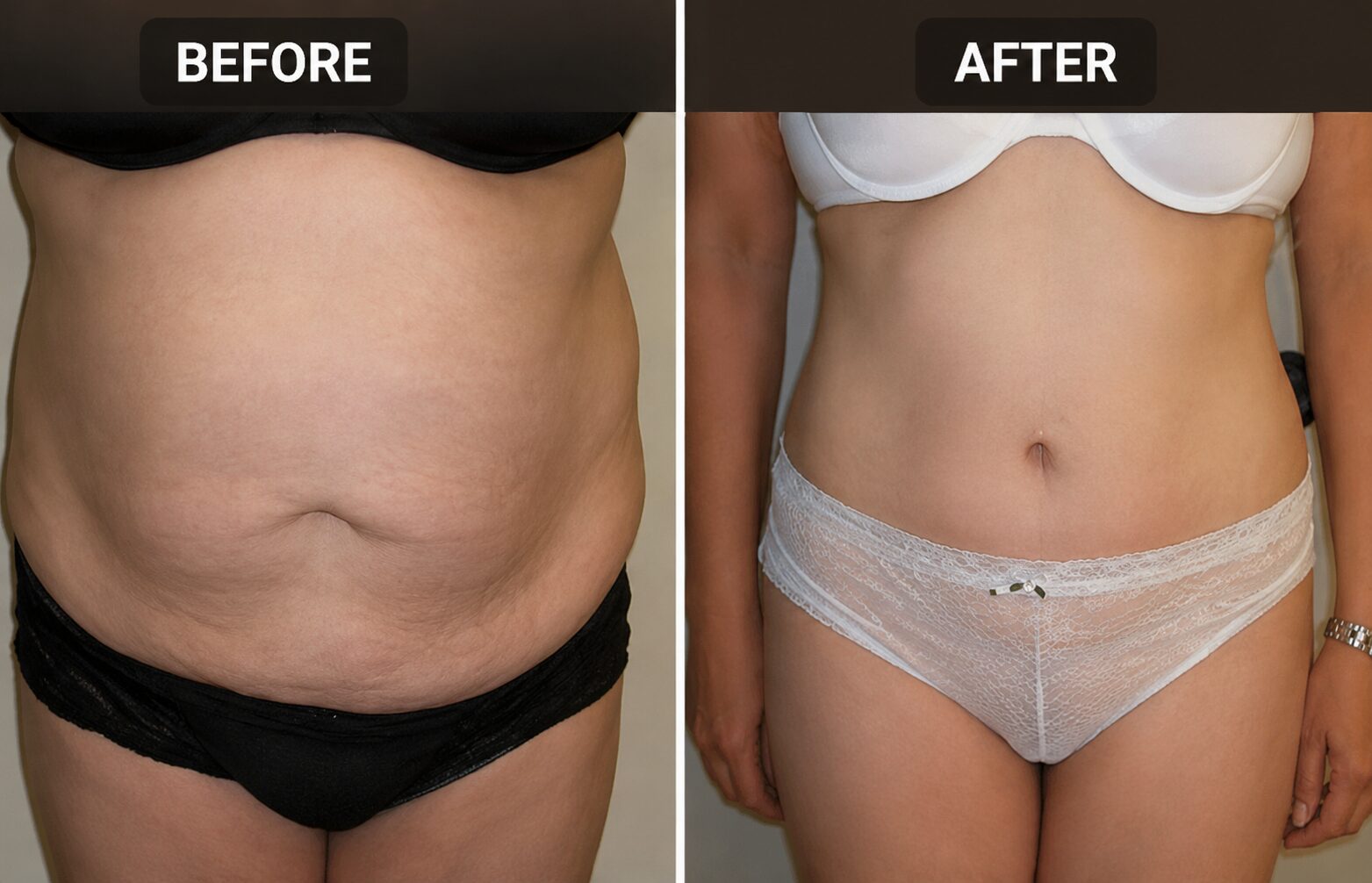
A tummy tuck is a surgical procedure that removes excess skin and fat from the abdomen and, in most cases, repairs the abdominal muscles that have weakened or separated. The result is a firmer, flatter abdominal profile and a smoother contour from the ribcage to the pubic area. While the procedure is often grouped with cosmetic body contouring, it addresses structural changes in the abdominal wall that are functional as much as they are aesthetic.
To understand why a tummy tuck is sometimes necessary, it helps to understand what happens to the abdomen over time. The skin has a remarkable ability to stretch, but that ability has limits. When the abdomen expands during pregnancy or with weight gain, the skin and its underlying connective tissue can stretch beyond the point of full recovery. When the volume later reduces, the skin does not always retract to its former tightness. What remains is loose, sometimes crepe-like skin that hangs or folds. Alongside this, the two vertical bands of muscle that run down the center of the abdomen, known as the rectus abdominis, can drift apart. This separation is called diastasis recti, and it produces a persistent bulge that core exercises can actually make more prominent rather than flatter.
A tummy tuck corrects both problems at once. The loose skin is removed, the fat is reduced, and the separated muscles are stitched back together into a firm internal corset. This combination is what allows a tummy tuck to achieve results that diet, exercise, and non-surgical treatments cannot match on their own. For patients exploring the full range of options, Dr. Ayala also offers a broader menu of body contouring procedures that can be considered individually or in combination.
Why the Abdomen Resists Diet and Exercise
One of the most common frustrations patients express is that they have done everything right and still cannot achieve a flat stomach. This is not a failure of willpower. It reflects the difference between what exercise can change and what it cannot. Exercise burns fat and builds muscle. It does not remove excess skin, and it cannot re-approximate muscles that have physically separated at their connective attachment.
When skin has lost its elasticity, strengthening the muscles beneath it does nothing to tighten the skin above. In fact, a stronger, larger core can sometimes push loose skin outward, making it appear more prominent. Similarly, when the rectus muscles have separated, traditional core work such as crunches can worsen the bulge by pushing the abdominal contents forward through the gap. Dr. Ayala addresses this directly in his educational content, including a discussion of whether it is truly possible to get a flat stomach after having kids. The honest answer for many patients is that surgery is the only reliable way to restore the abdominal wall once these structural changes have occurred.
Understanding this distinction is important because it reframes the decision. A tummy tuck is not a shortcut or a replacement for a healthy lifestyle. It is a corrective procedure for anatomical changes that lifestyle alone cannot reverse. Patients who maintain a stable weight and stay active tend to enjoy the best and most lasting results.
Who Is a Good Candidate for a Tummy Tuck?
The ideal tummy tuck candidate is someone who is in good general health, close to a stable goal weight, and bothered by loose abdominal skin, stubborn fat, weakened abdominal muscles, or a combination of these. Many candidates are mothers whose abdomens have changed after one or more pregnancies. Others are individuals who have lost a significant amount of weight, whether through diet and exercise, medication, or bariatric surgery, and are left with skin that no longer fits their smaller frame.
Being at a stable weight matters because a tummy tuck is a contouring procedure, not a weight loss procedure. Significant weight fluctuations after surgery can compromise the result, since gaining weight can stretch the newly tightened skin and muscle, while further large losses can create new laxity. For this reason, Dr. Ayala generally recommends that patients reach a weight they can realistically maintain before undergoing surgery.
Candidacy also depends on health factors. Good candidates are non-smokers or are willing to stop smoking well before and after surgery, since smoking significantly impairs healing. They should be free of medical conditions that would make surgery or recovery unsafe, and they should have realistic expectations about what the procedure can and cannot achieve. Women who are planning future pregnancies are often advised to postpone a tummy tuck, because a subsequent pregnancy can undo the muscle repair. During a private consultation, Dr. Ayala evaluates each of these factors individually. Prospective patients can begin that process by scheduling an appointment at the San Antonio practice.
Perhaps most importantly, a good candidate understands that a tummy tuck involves real surgery with a meaningful recovery. The reward is significant, but so is the commitment. Patients who approach the procedure with patience and realistic goals are consistently the most satisfied.
Full Abdominoplasty vs Mini Tummy Tuck
One of the first decisions in tummy tuck planning is which version of the procedure best suits the patient. The two main options are a full abdominoplasty and a mini tummy tuck, and the difference between them is substantial. Choosing correctly is essential, because a mini tummy tuck cannot deliver the results of a full one, and a full tummy tuck may be more surgery than a patient with limited laxity actually needs.
The Full Tummy Tuck
A full or standard abdominoplasty addresses the entire abdomen, both above and below the navel. It is the right choice for patients with a significant amount of loose skin, muscle separation that extends the full length of the abdomen, or excess tissue across the whole midsection. During a full tummy tuck, the incision runs horizontally across the lower abdomen from hip to hip, and a second incision is made around the navel so that the skin above can be lifted and redraped.
Through this access, Dr. Ayala repairs the abdominal muscles along their entire vertical length, removes the excess skin, and tightens what remains. Because the skin is pulled downward, the belly button is repositioned through a new opening so that it sits naturally on the flatter abdomen. The full tummy tuck produces the most dramatic transformation, and it is the version most often chosen by mothers after multiple pregnancies and by patients following major weight loss. Dr. Ayala has documented his approach to custom procedures, including a case in which a custom tummy tuck slimmed and tightened the abdomen to match a patient's individual anatomy.
The Mini Tummy Tuck
A mini tummy tuck is a more limited procedure that focuses only on the area below the navel. It suits a narrower group of patients, typically those whose concerns are confined to a small amount of loose skin and a lower abdominal pooch beneath the belly button, with little or no laxity above it. The incision is shorter than in a full tummy tuck, and the belly button is usually not repositioned because the skin above it is not extensively lifted.
Because it addresses less tissue and often involves more limited muscle repair, a mini tummy tuck generally comes with a shorter surgery, a smaller scar, and a somewhat quicker recovery. However, it is important to be realistic. Patients who have muscle separation above the navel or significant upper abdominal skin laxity will not achieve their goals with a mini procedure. Attempting to treat a full-abdomen problem with a mini tummy tuck leads to disappointment. The candidate pool for a true mini tummy tuck is smaller than many people assume, which is why an honest in-person evaluation is so valuable.
How Dr. Ayala Helps Patients Choose
The decision between a full and mini tummy tuck is not one a patient should make alone based on a preference for a smaller scar. It is a clinical judgment based on the extent of skin laxity, the degree and location of muscle separation, and the patient's goals. During the consultation, Dr. Ayala examines the abdomen, assesses the muscle wall, and discusses what each option can realistically accomplish. In some cases, patients who hoped for a mini procedure learn that a full tummy tuck is the only way to reach their goals, while others are relieved to find that their concerns can be addressed with a more limited approach. The right answer is the one that matches the anatomy in front of the surgeon.
Muscle Repair: Correcting Diastasis Recti
For many tummy tuck patients, the muscle repair is the single most transformative part of the procedure, even though it happens entirely beneath the surface. Diastasis recti, the separation of the vertical abdominal muscles, is extremely common after pregnancy and is also seen after significant weight gain. When these muscles drift apart, the connective tissue between them, called the linea alba, stretches and weakens. The abdominal wall loses its firm, flat structure, and the contents of the abdomen press forward, producing a rounded profile that persists no matter how lean a person becomes.
During a tummy tuck, Dr. Ayala brings the separated muscles back together using internal sutures that run vertically down the midline. This effectively rebuilds the natural corset of the abdominal wall, cinching the waist and flattening the profile from the inside. The repair is permanent in the sense that the sutures hold the muscles in their corrected position while the tissues heal together, though the integrity of the repair can be compromised by a future pregnancy or by significant weight gain.
The benefits of muscle repair extend beyond appearance. Patients frequently report improved core strength and stability after the abdominal wall has been restored, and some experience relief from the lower back discomfort that can accompany a weak, separated core. Dr. Ayala has discussed the potential health benefits of a tummy tuck beyond the cosmetic improvement, including these functional gains. For patients whose primary frustration is a bulge that will not flatten despite a strong exercise routine, understanding that the cause is structural, and that muscle repair is the solution, is often a turning point in their decision.
Scar Placement and Management
Any surgery that removes skin leaves a scar, and honesty about scarring is an essential part of tummy tuck planning. The good news is that Dr. Ayala plans the incision with great care to keep the resulting scar as low and as concealable as possible. In a full tummy tuck, the main incision is placed horizontally across the lower abdomen, positioned so that it can be hidden beneath underwear or a swimsuit bottom. The exact placement is customized to each patient's body and clothing preferences.
The length of the scar depends on the amount of skin being removed. A full tummy tuck involves a longer incision than a mini, and patients following massive weight loss may require a more extensive incision to remove all of the redundant skin. There is also a small scar around the navel in a full tummy tuck, where the belly button is repositioned. While these scars are permanent, they typically fade and flatten considerably over the course of the first year to eighteen months as they mature.
Scar care plays an important role in the final appearance. Dr. Ayala provides specific guidance on caring for the incision, which may include keeping it clean, protecting it from sun exposure, and using scar-management products once the wound has healed. Patients who follow this guidance closely tend to achieve the most favorable scar outcomes. For those with existing scars from prior surgeries or injuries elsewhere on the body, the practice also offers dedicated scar revision treatment. It is worth remembering that most patients consider a low, fading scar a very reasonable trade for a dramatically improved abdominal contour.
The Tummy Tuck Procedure Step by Step
Understanding what happens during surgery can ease much of the anxiety that surrounds it. While every procedure is customized, a full tummy tuck generally follows a consistent sequence. First, the patient is placed under anesthesia so that the procedure is entirely comfortable. Dr. Ayala then makes the planned lower abdominal incision and, in a full tummy tuck, the incision around the navel.
Next, the skin is carefully lifted away from the abdominal wall up toward the ribcage, exposing the separated muscles. Dr. Ayala repairs the muscles with internal sutures, rebuilding the firm abdominal wall described earlier. Once the muscle repair is complete, the skin is redraped downward, the excess is removed, and the remaining skin is smoothed into its new position. In a full tummy tuck, a new opening is created for the belly button so that it sits naturally. Liposuction is frequently used in conjunction to refine the contour of the flanks and upper abdomen, blending the result into the surrounding areas. Finally, the incisions are closed in layers, and drains may be placed to prevent fluid from accumulating during the early healing phase.
The procedure typically takes a few hours, depending on its extent and whether it is combined with other treatments. Dr. Ayala performs surgery in an accredited, well-equipped setting with patient safety as the foremost priority. Patients receive detailed pre-operative and post-operative instructions so that they know exactly what to expect on the day of surgery and in the days that follow.
Anesthesia and Safety
A tummy tuck is performed under general anesthesia, which keeps the patient completely asleep and comfortable throughout. Anesthesia is administered and monitored by a qualified professional, and patients are evaluated beforehand to confirm they are healthy enough for the procedure. Dr. Ayala reviews the patient's medical history, current medications, and any underlying conditions during the consultation to plan for the safest possible experience.
Safety continues well beyond the operating room. Patients are given clear guidance on how to reduce risks such as blood clots, including early walking after surgery, and how to recognize any signs that warrant a call to the office. The practice emphasizes an unhurried, thorough approach in which patients are never rushed or pressured, and every question is answered before moving forward. This careful, individualized philosophy is central to how Dr. Ayala practices, and it is one of the reasons patients across the San Antonio area seek him out. Those who want to learn more about his background can read about Dr. Ayala and his training.
The Tummy Tuck Recovery Timeline
Recovery is the part of the tummy tuck journey that patients most want to understand, and setting realistic expectations here is crucial. A tummy tuck is a significant procedure, and healing takes time. Knowing the general arc of recovery helps patients plan their lives around it and reduces anxiety when normal healing sensations arise.
The First Week
The first several days are the most demanding. Patients typically feel tightness across the abdomen, since the muscles have been tightened and the skin redraped. Soreness, swelling, and bruising are expected, and most patients walk in a slightly bent posture at first to avoid tension on the incision. Rest is essential, but so is gentle, frequent walking, which promotes circulation and reduces the risk of complications. Discomfort is managed with prescribed medication, and any surgical drains are monitored and usually removed within the first week or two. Most patients need help at home during this period and should arrange for support with daily tasks and, if applicable, childcare.
Weeks Two to Four
As the initial soreness eases, patients begin to feel noticeably better. Many are able to return to desk-based work around the two-week mark, provided their job does not involve strenuous activity or heavy lifting. Swelling remains present and can fluctuate throughout the day. A compression garment is worn during this phase to support the healing tissues, control swelling, and help the skin conform to its new contour. Patients gradually stand straighter as the tightness resolves and the tissues relax into their new position.
Weeks Four to Eight
By this stage, everyday activity feels much more comfortable, and patients are typically cleared to resume light exercise as Dr. Ayala advises. Strenuous activity, core workouts, and heavy lifting remain off-limits until the muscle repair has fully healed, which generally takes several weeks longer. Swelling continues to subside steadily, and the contour becomes progressively more refined. Patients often begin to appreciate their new shape during this window, even though the final result is still developing.
Three Months and Beyond
Most patients are back to their full routine, including exercise, by around the two to three month mark, though this varies by individual and by the extent of the surgery. Residual swelling continues to resolve over the following months, and the abdominal contour continues to refine. Scars are still maturing at this point and will keep fading over the first year to eighteen months. The final, settled result of a tummy tuck is best judged once all swelling has resolved and the tissues have fully healed. Patience during this period is rewarded with a firmer, flatter abdomen that reflects the full benefit of the procedure.
Combining a Tummy Tuck with Other Procedures
Many patients choose to combine a tummy tuck with additional procedures to address multiple concerns in a single surgery and a single recovery. The most well-known combination is the mommy makeover, which pairs a tummy tuck with breast procedures such as a lift or augmentation to restore the changes that pregnancy and breastfeeding bring to both the abdomen and the breasts. For mothers who feel their body has changed in more than one area, a combined approach can be both efficient and rewarding.
Liposuction is very commonly performed alongside a tummy tuck to sculpt the flanks, waist, and upper abdomen, blending the tightened central area smoothly into the surrounding contours. This combination often produces a more complete and harmonious result than a tummy tuck alone. Depending on individual goals, other body procedures such as an arm lift or a buttock enhancement may also be considered as part of a broader body contouring plan.
Combining procedures has real advantages, including a single anesthesia event and one consolidated recovery rather than several. It is not right for everyone, however. The decision depends on the patient's health, the total surgical time involved, and the goals being addressed. Dr. Ayala evaluates whether combining procedures is safe and appropriate for each individual, always prioritizing safety over convenience.
Results, Longevity, and Maintaining Your Outcome
A tummy tuck delivers results that are meant to last, and for most patients they do. The skin that is removed does not grow back, and the repaired muscles remain in their corrected position. What can change the result over time are the two factors within a patient's influence: weight stability and future pregnancy. Significant weight gain can stretch the tightened skin and abdominal wall, while a subsequent pregnancy can separate the repaired muscles again. For this reason, patients who have completed their families and who maintain a stable weight are best positioned to enjoy a durable outcome.
Maintaining the result is largely a matter of continuing the healthy habits that made a patient a good candidate in the first place. A balanced diet, regular activity, and a stable weight preserve the flatter contour for years. Natural aging continues, and skin quality gradually changes over a lifetime, but the fundamental improvement from a tummy tuck, the removal of excess skin and the repair of the muscle wall, remains. Patients frequently describe the result as restoring a version of themselves they thought was gone for good, and that renewed confidence is often as meaningful as the physical change.
Cost and Financing Considerations
The cost of a tummy tuck varies based on several factors, including whether it is a full or mini procedure, whether liposuction or other procedures are combined with it, the length and complexity of the surgery, and associated costs such as anesthesia and facility fees. Because every plan is customized, the most accurate cost information comes from a personal consultation, where the specific procedure and its details can be discussed.
Ayala Plastic Surgery understands that cosmetic surgery is a meaningful investment, and the practice offers payment and financing options to help make treatment more accessible. Financing can allow patients to move forward with a plan that fits their budget through manageable monthly payments. During the consultation, the team reviews these options so that cost is transparent and there are no surprises. Patients are encouraged to ask questions about pricing and financing openly, as the practice's philosophy is built on clarity and comfort rather than pressure.
Preparing for Your Tummy Tuck Surgery
Good preparation contributes meaningfully to a smooth surgery and recovery, and Dr. Ayala guides each patient through the steps in advance. In the weeks before surgery, patients are typically asked to reach a stable weight, since being at a consistent goal weight improves both the result and its longevity. Smokers are asked to stop well before the procedure and to remain smoke-free during recovery, because nicotine constricts blood vessels and significantly impairs healing, raising the risk of complications at the incision.
Patients receive instructions on which medications and supplements to pause, as certain blood-thinning agents can increase bleeding and bruising. A pre-operative health evaluation confirms that the patient is a safe candidate and identifies anything that should be addressed beforehand. Because a tummy tuck involves a real recovery, planning the logistics of that recovery is just as important as the medical preparation. Patients should arrange for a responsible adult to drive them home and stay with them for the first day or two, prepare a comfortable recovery space at home, and set up help with cooking, cleaning, and childcare during the early weeks when lifting and strenuous activity are off-limits.
Filling prescriptions in advance, stocking easy meals, arranging loose and comfortable clothing that does not press on the abdomen, and preparing a recliner or bed with supportive pillows all make the first days easier. Patients who prepare thoroughly tend to have a calmer, more comfortable recovery, because they can focus entirely on healing rather than scrambling to manage daily tasks. Dr. Ayala's team reviews all of these preparations during the pre-operative visit so that every patient feels ready and confident on the day of surgery.
Frequently Asked Questions
Is a tummy tuck the same as liposuction?
No. Liposuction removes localized fat but does not remove excess skin or repair separated muscles. A tummy tuck removes loose skin, reduces fat, and tightens the abdominal wall. The two are often combined, but they address different problems, and liposuction alone cannot correct skin laxity or diastasis recti.
Will a tummy tuck help me lose weight?
A tummy tuck is a contouring procedure, not a weight loss procedure. While removing excess skin and fat does reduce some weight, the amount is modest, and the goal is a firmer, flatter shape rather than a lower number on the scale. Patients should be at or near a stable goal weight before surgery.
How long is the recovery from a tummy tuck?
Most patients return to desk work around two weeks after surgery and to light activity by four to six weeks, with strenuous exercise resuming around two to three months. Swelling continues to resolve and the contour refines over the following months, with scars maturing over the first year to eighteen months.
What is the difference between a full and a mini tummy tuck?
A full tummy tuck addresses the entire abdomen above and below the navel, including full muscle repair and repositioning of the belly button. A mini tummy tuck treats only the area below the navel and suits patients with limited lower abdominal laxity. Most patients with significant changes need a full procedure.
Can I have a tummy tuck if I plan to have more children?
It is generally recommended to postpone a tummy tuck until you have finished having children, because a future pregnancy can re-separate the repaired muscles and stretch the tightened skin, potentially undoing the result. Dr. Ayala discusses individual timing during the consultation.
Will the scar be visible?
The main incision is placed low across the lower abdomen so that it can be concealed beneath underwear or a swimsuit. The scar is permanent but typically fades and flattens significantly over the first year to eighteen months, especially with good scar care.
Does a tummy tuck repair separated abdominal muscles?
Yes. Muscle repair is a core part of a full tummy tuck. Separated abdominal muscles, known as diastasis recti, are brought back together with internal sutures, which flattens the profile, cinches the waist, and can improve core strength and stability.
Can a tummy tuck be combined with other procedures?
Yes. A tummy tuck is frequently combined with liposuction to refine surrounding areas and with breast procedures as part of a mommy makeover. Dr. Ayala evaluates whether combining procedures is safe and appropriate for each patient based on their health and goals.
Schedule a Tummy Tuck Consultation in San Antonio
A tummy tuck can restore a firmer, flatter, more confident midsection when diet and exercise have reached their limits, but the right plan always begins with a personal evaluation. Dr. John Ayala takes the time to understand each patient's concerns, examine their anatomy, and recommend the approach that will serve them best, whether that is a full abdominoplasty, a mini tummy tuck, or a combination with other body procedures. Patients in and around San Antonio who are ready to explore their options can schedule a consultation or contact Ayala Plastic Surgery to begin the conversation.